
What RTP Really Means in Online Slots
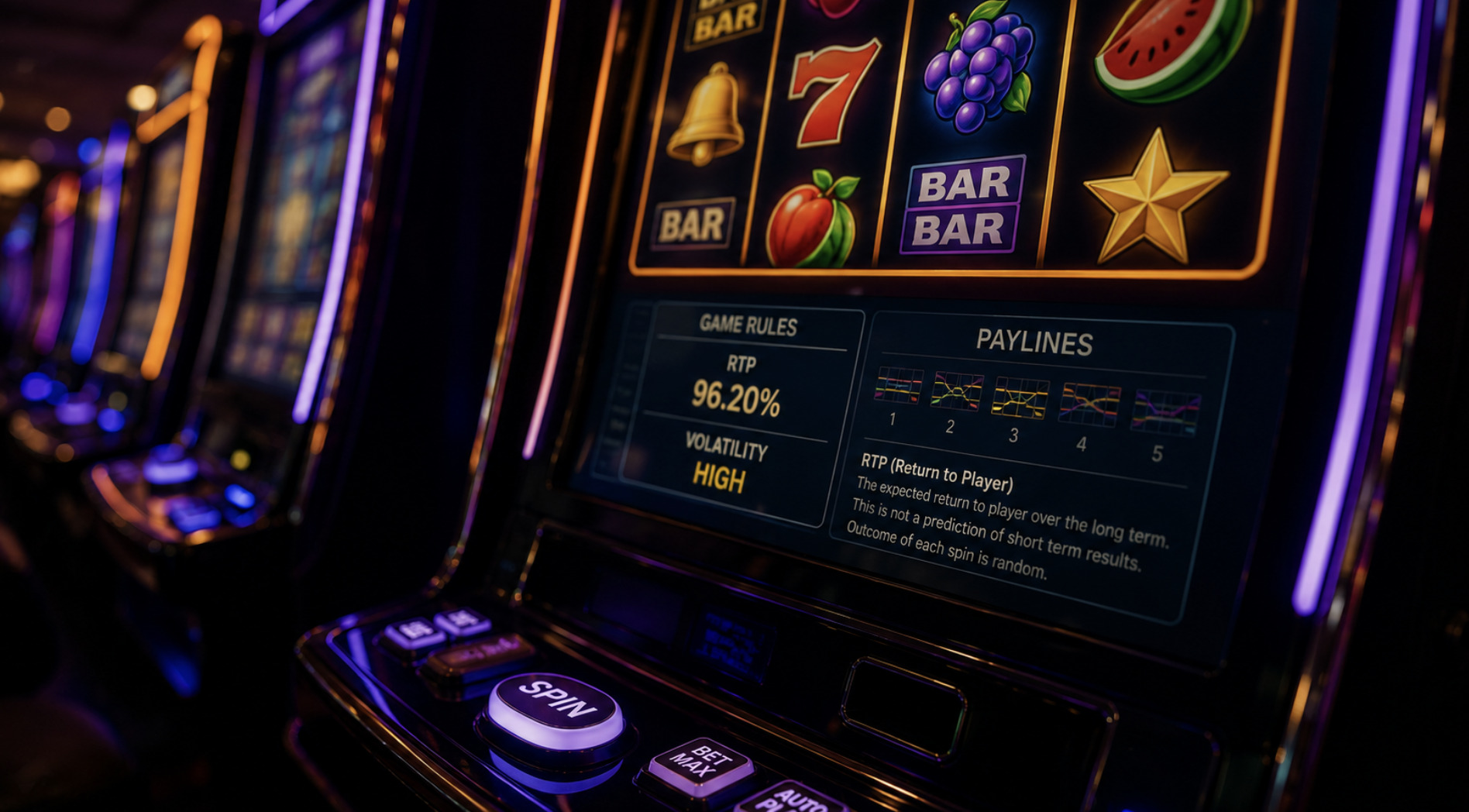
Somewhere on the information screen of nearly every online slot sits a small percentage — 96.2%, perhaps, or 95.5%. Most players glance past it. A minority know it as RTP and treat it as a magic number that tells them which games are "generous." Both groups are missing the point. RTP is genuinely the most useful figure a slots player has for comparing games, and also the most consistently misunderstood, because it describes something quite specific and says nothing at all about the thing players most want to know: what will happen to me tonight. Reading it correctly is the difference between managing your play with clear eyes and chasing a number that was never a promise.
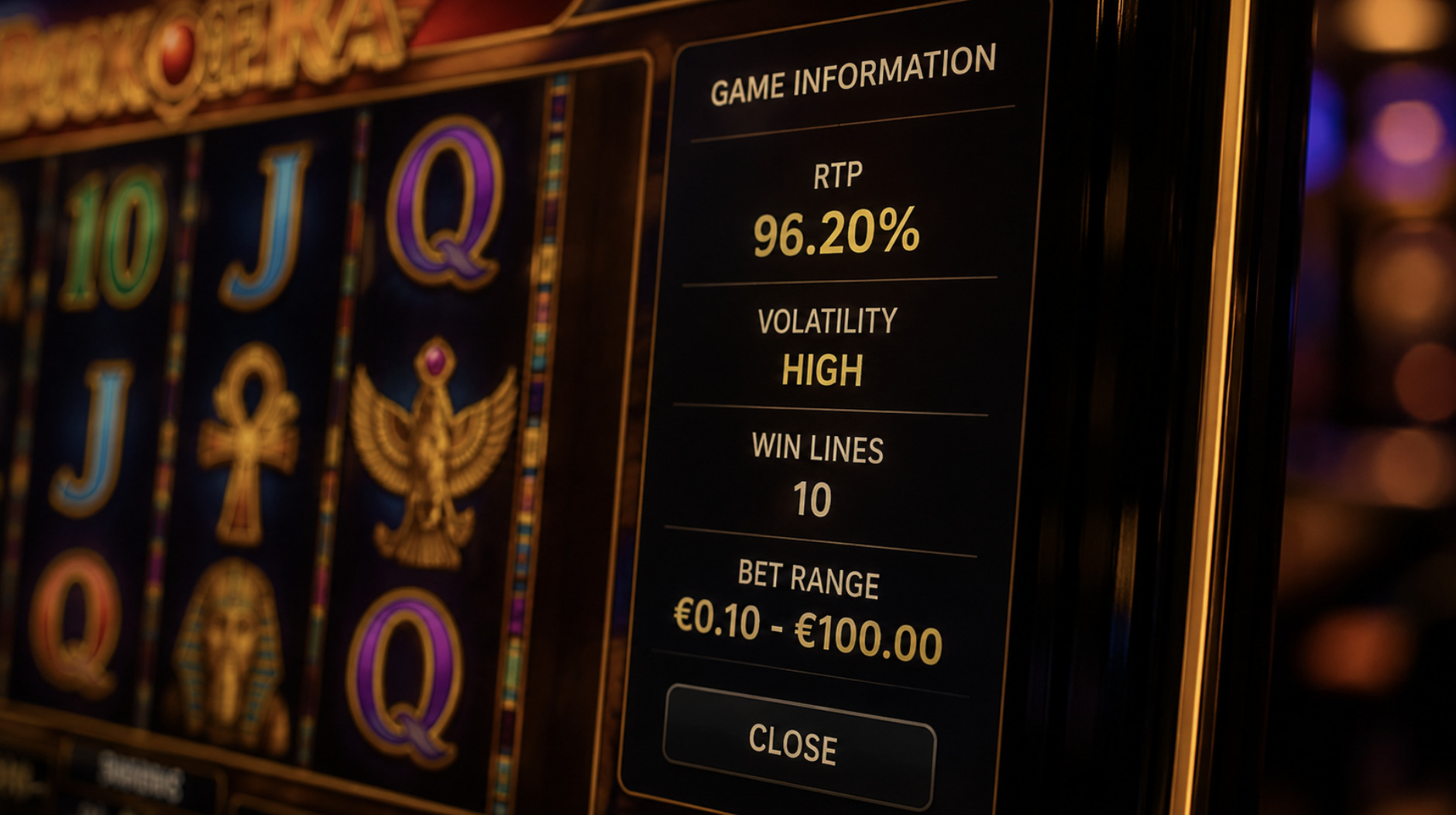
This is a plain, thorough explanation of what RTP is, how it actually behaves, and how to use it without falling into the traps that catch even experienced players. By the end you should understand the figure better than most of the pages competing to explain it, and you should never again mistake a long-run average for a forecast.
Defining RTP without the fog
RTP stands for Return to Player, and it describes the proportion of all the money wagered on a game that the game is designed to pay back to players over an enormous number of spins. A slot with an RTP of 96% is built so that, across many millions of spins, it returns roughly 96 pence for every pound staked. The remaining slice — 4% in this case — is the house edge, the mathematical margin the operator keeps. That is the entire definition, and the first thing to notice is what it does not mention: you, your session, or any particular stretch of play.
The phrase carrying all the weight is "over an enormous number of spins." RTP is a theoretical long-run average, calculated across a volume of play far larger than any individual will ever produce in a lifetime. It is a statement about the machine's design over something close to infinity, not a description of what a real person experiences in an afternoon. Almost every misunderstanding of RTP comes from collapsing that distinction — from reading a figure that describes the behaviour of millions of spins as though it described the next hundred. Hold the definition precisely and the rest follows.
Why your session will never match the number
Consider a fair coin. Flip it ten million times and the split between heads and tails will land almost exactly at fifty-fifty. Flip it ten times and you might see eight heads and two tails, and no one would call the coin broken. Slots behave the same way. The published RTP is the ten-million-flip figure. Your evening is the handful of flips, where results scatter widely around the long-run average and often bear little resemblance to it.
This is why two players can sit at the same 96% slot and have opposite nights — one lands a substantial win, the other watches their balance drain quickly — with neither outcome contradicting the RTP in the slightest. In the short run, results are dominated not by the theoretical return but by variance, the natural swing of a random process. The RTP is real, and over an unimaginable number of spins it would assert itself precisely. Over your session it is almost irrelevant to the specific outcome. Understanding this frees you from two errors at once: the belief that a high-RTP game owes you steady returns, and the suspicion that a losing session on a "96% game" means something is rigged. Both misread the same number in the same way.
RTP is a rate of cost, not a rate of winning
A more accurate way to think about RTP is as a measure of how expensive a game tends to be over time, rather than how likely you are to win on it. Because the figure is always below 100% on commercial slots, extended play trends, on average, toward a net loss — that is simply what a house edge is. A higher RTP means a slower average rate of loss; a lower RTP means a faster one. Reframed this way, the number becomes genuinely practical rather than misleadingly hopeful.
The useful comparison is fuel economy. Telling you a game's RTP is like telling you a car's miles per gallon: it does not reveal where you will end up on any single journey, but it tells you which vehicle drinks less along the way. If two slots appeal to you equally, the one with the higher RTP will, on average, cost you less across many sessions, because more of your wagered money cycles back to you over the long run. That is real, useful information — provided you never mistake efficiency for a guarantee of arriving richer. A more economical game is still a game you should expect to lose money on over time; it simply loses it more slowly.
The variant trap that catches even careful players
Here is a detail that surprises people who consider themselves knowledgeable: a single slot title can exist in more than one RTP configuration. Some developers release a game with several selectable return settings — a headline figure alongside noticeably lower ones — and it is the operator, not the player, who decides which version runs on a given site. The same familiar game, with the same art and the same features, can therefore be offering a materially different return depending on where it is played.
Because the gap between the top and bottom configurations can be meaningful, the sensible habit is to check a game's RTP on the specific site you are using rather than assuming the highest figure you have seen elsewhere applies everywhere. This is precisely where transparency separates the better operators from the rest, and it is why the more open sites, including newer UK-facing operators such as Gambana, display each game's RTP within its information panel rather than leaving players to hunt for it or assume the best case. The habit of looking is small, but it reflects a broader principle: an informed player checks the version they are actually playing rather than trusting a number that may belong to a different configuration entirely.
Reading RTP alongside volatility
RTP never travels alone, and reading it in isolation produces a distorted picture. Its constant companion is volatility — sometimes called variance — and the two describe genuinely different things that players routinely conflate. RTP tells you the long-run return. Volatility tells you the shape of the ride to get there. Two slots can share an identical 96% RTP and feel like completely different games, because one pays small amounts frequently and the other pays rarely but occasionally large.
This matters enormously for setting expectations. A high-RTP, high-volatility slot can still empty a modest balance during a long payless stretch, because its generous theoretical return is concentrated in rare events that may simply not occur while you are playing. The 96% is honest; it is just distributed unevenly, front-loaded with drought and back-loaded with the occasional flood. Reading RTP and volatility together gives a far truer picture than either alone: the first tells you the average cost of the game over time, the second tells you how bumpy the journey between those averages is likely to be. A player who chooses purely on RTP and lands on a high-variance game is often baffled by a harsh session that the number, read properly, would have led them to expect.
Hit frequency, the third piece of the picture
A third figure sometimes appears alongside these two: hit frequency, the percentage of spins that produce any win at all. It is easy to assume this is the same as volatility, but it measures something distinct and worth understanding. A game can hit often and still be volatile, if most of those frequent hits are tiny and the real money is locked inside rare features. Another can hit less often but pay consistent mid-sized amounts, feeling steadier despite the lower frequency.
Read together, these figures describe not just the cost of a game but its entire emotional texture. RTP sets the long-run return, volatility describes how lumpily that return arrives, and hit frequency tells you how often the reels reward you with anything at all. A slot that pays small amounts on nearly half its spins will feel utterly different from one that rewards a fraction of spins with occasional giants, even at the same RTP. Players who learn to read all three, rather than fixating on the single headline percentage, choose games that actually match the experience they want and the budget they have, instead of being surprised by a game that behaved nothing like its number suggested.
Using RTP sensibly, and its hard limits
None of this makes RTP useless — quite the opposite. It is one of the few genuinely objective tools a player has for comparing games, and used correctly it offers a small but real advantage. The sensible approach is to treat it as a long-run efficiency figure that informs which games to choose, not a lever you can pull for a better session. If you enjoy slots and want your entertainment budget to stretch further across many sessions, favouring higher-RTP titles is a rational, if modest, edge over the long term.
What RTP cannot do is change the fundamental nature of the games, and being honest about its limits is as important as appreciating its use. It cannot make a slot profitable to play, predict an outcome, or influence the next spin, which is determined independently by a certified random number generator with no memory of what came before. No slot is ever "due," and no reading of RTP alters the fact that the house edge is built in and permanent. This is why the number belongs to a mindset that treats these games as paid entertainment with a known average cost, rather than as an income strategy. Setting a deposit limit before you play, deciding in advance what a losing session looks like, and understanding that even the best RTP still favours the house are the practices within which the number actually helps. Gambling is for adults, and support through services such as GamCare and BeGambleAware exists for anyone for whom it stops being fun.
Conclusion
RTP is a small figure carrying a large amount of misunderstanding, and reading it correctly changes how you approach every slot you play. It is a theoretical long-run average, not a session forecast; a measure of how slowly a game tends to cost you money, not a guarantee of winning; and only half the story without volatility and hit frequency beside it. Read that way, it becomes a genuinely useful compass for choosing games and calibrating expectations — the one objective number a player can lean on. Read as a promise, it becomes a source of false hope and misplaced suspicion, blamed for losing sessions it never predicted and credited with wins it never caused. The number was never lying to players; it simply speaks the language of probability rather than certainty. Make that translation, remember to check the version you are actually playing, and the most misunderstood figure in online slots becomes one of the most honest and useful things on the screen.