
The 2026 UKGC Reforms Are the Biggest Shake-Up in Two Decades — Here Is What Actually Changed
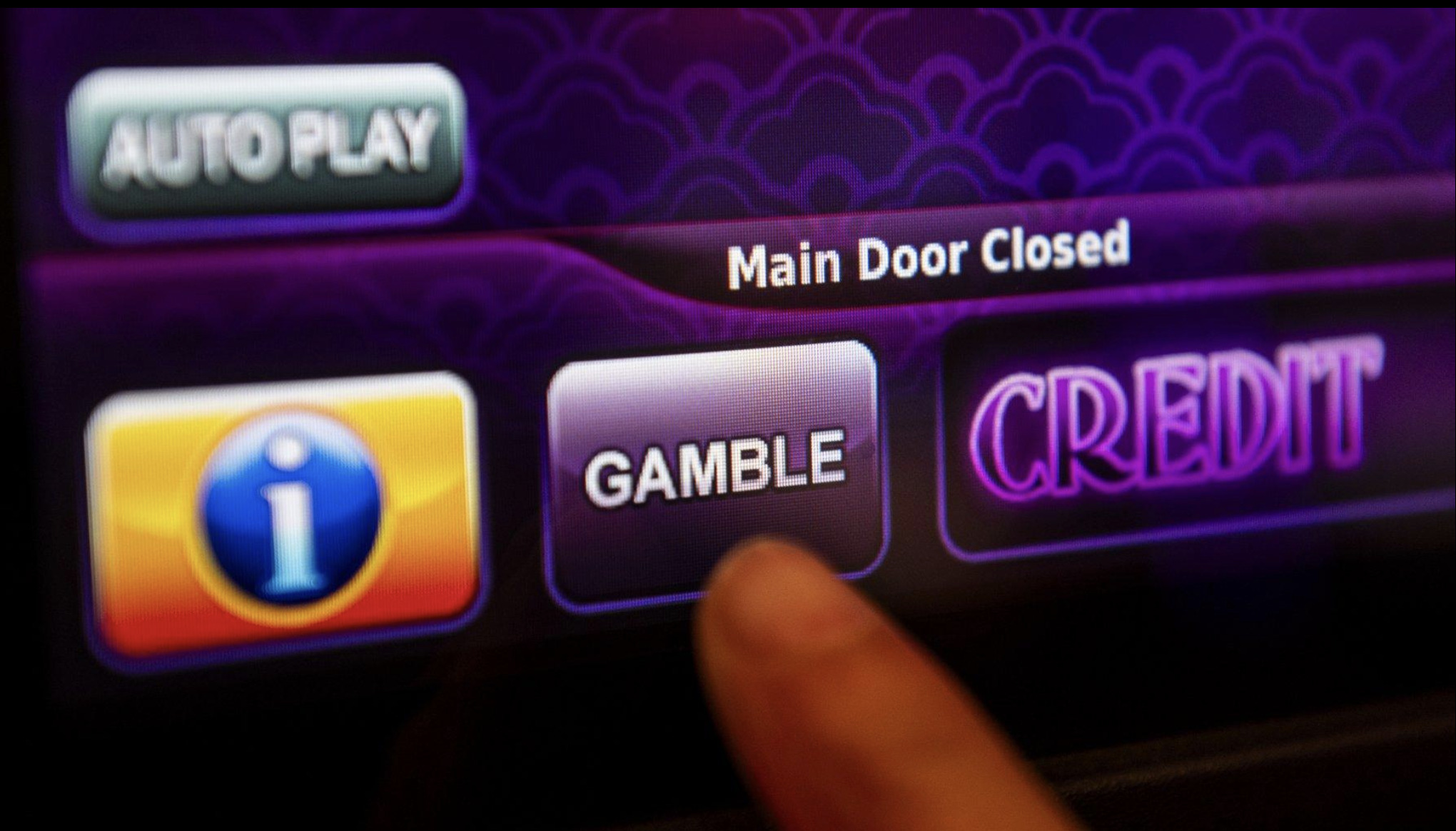
April 2026 was the month UK gambling regulation changed more than it had in twenty years. Three major reforms landed simultaneously — the product of a process that began with the Government's 2023 Gambling Act Review White Paper and ended with a wave of secondary legislation that every UKGC-licensed operator had to absorb at once.
If you play at a UK casino in 2026, your experience has already changed whether you have noticed it or not. This is what happened.
Remote Gaming Duty: From 21% to 40% Overnight
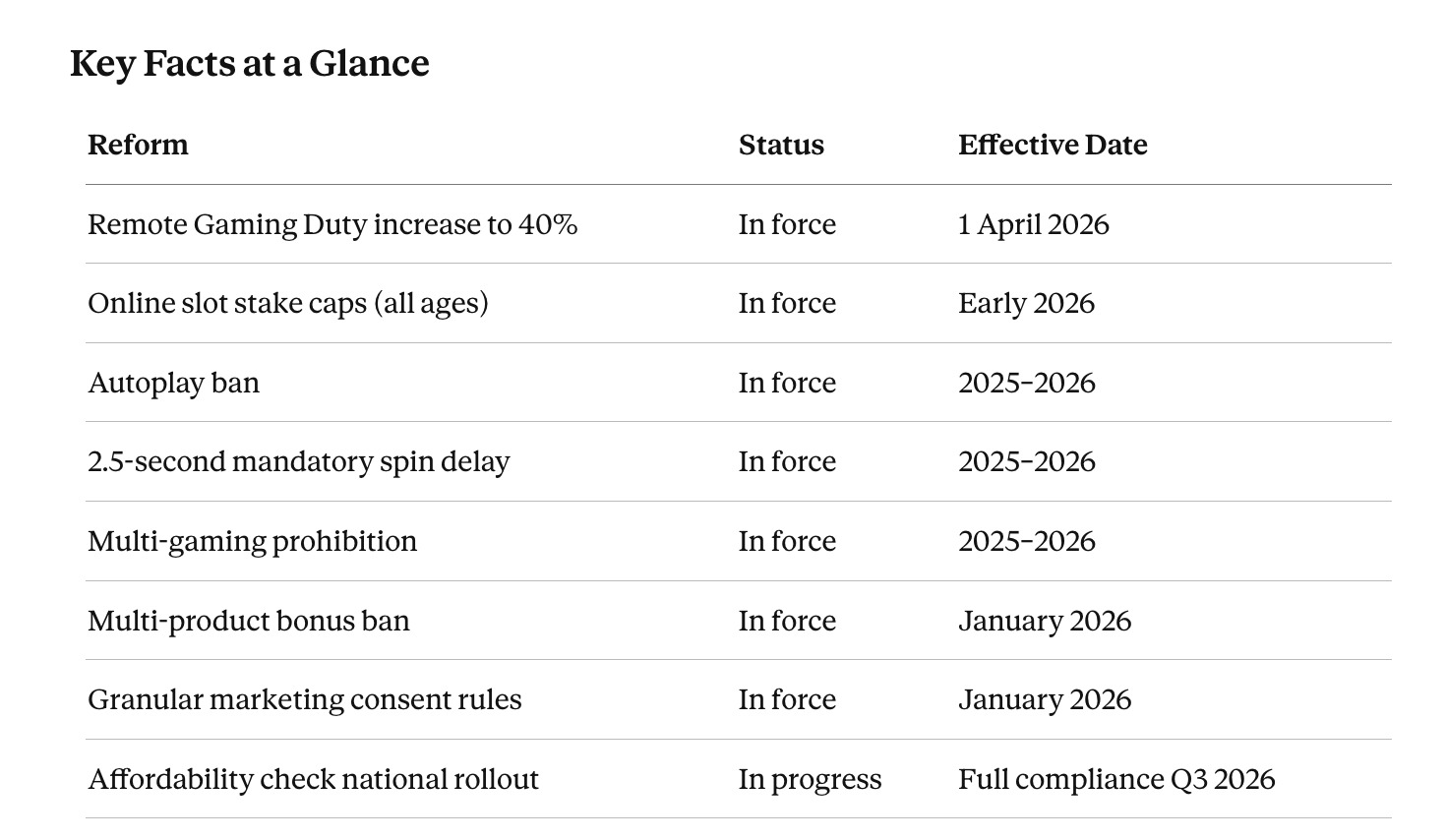
The single most significant financial change is one most players will not see directly. Remote Gaming Duty — the tax UK-licensed online casino operators pay on their gross gaming revenue — rose from 21% to 40% on 1 April 2026. Almost doubled, overnight.
Online slots alone account for more than half of total UK gross gambling yield in UKGC figures. For operators heavily weighted toward the slots market, this represents a fundamental shift in unit economics. A mid-size operator generating £50 million in annual GGR now pays roughly £9.5 million more in annual tax compared to 2025. Major operators are absorbing losses in the hundreds of millions across the industry.
The government's stated rationale is that gambling operators generate substantial profits from UK players and those profits should contribute more to public revenue. A portion of the additional income funds the £26 million in extra UKGC enforcement capacity announced alongside the reforms.
What players notice: Reduced bonus generosity is the most visible effect. Wagering requirements have tightened at several major operators. VIP programme structures are being revised. Maximum cashback rates have shrunk. No operator has announced direct RTP reductions — doing so without disclosure would be a UKGC compliance breach — but the overall promotional value available to UK players has contracted since April. The market is adjusting.
One footnote: Bingo Duty was abolished on the same date, simplifying the tax structure for that specific product. A welcome simplification, but a minor data point against the scale of the RGD increase.
Stake Caps on Online Slots Are Now Statutory Law
Maximum stake limits for online slot games are now statutory across all UKGC-licensed platforms. They apply to every spin on every slot at every compliant UK casino:
Age GroupMaximum Stake Per Spin18 – 24£225 and over£5
The 18–24 limit was first introduced in May 2025. Full statutory enforcement covering all age groups arrived in early 2026. Most compliant platforms now display the applicable limit directly on the game interface. Operators that allow players to exceed these thresholds face formal UKGC regulatory action.
The policy is targeted at online slots specifically because the product accounts for the majority of UKGC-identified gambling harm cases. The combination of rapid play, continuous availability, and immersive design creates risk profiles that fixed-odds betting and sports wagering products do not replicate at the same intensity. Stake caps reduce the maximum rate at which a session can escalate from recreational spend to significant loss.
For players who previously staked £10–£20 per spin, the UKGC-regulated experience in 2026 is a materially different product from what unlicensed offshore alternatives can offer without restriction. That gap is not an accident of the policy design — it is a known pressure point that enforcement spending is intended to address.
Autoplay Gone. Turbo Mode Gone. Multi-Gaming Banned.
Three gameplay features that were standard across UK online casinos until recently are now completely prohibited at all UKGC-licensed platforms:
Autoplay has been removed entirely. No partial version or modified autoplay is permitted — the feature does not exist at compliant UK casinos. Players who used autoplay as a session management tool must adapt to manual spinning.
Turbo mode is similarly banned. This was the accelerated spin option that bypassed the standard animation cycle and delivered results faster. Combined with autoplay, it enabled time between spins of under a second. That pace is now illegal.
Mandatory 2.5-second spin intervals are in force. Every spin must take a minimum of 2.5 seconds from initiation to result — a significant pace reduction compared to what was possible before the reforms.
Multi-gaming — simultaneously playing two or more casino games — is prohibited. This was common among experienced players who spread sessions across multiple tables or slots to manage variance. It is no longer permitted.
The cumulative effect is a UK online casino session that feels slower and more deliberate than in 2024. The UKGC's position is explicit: this is the intention. Slower, interrupted play reduces impulsive decision-making and creates natural pause points. Session data — time played, wins and losses — must also now be displayed in real time at all UKGC-licensed casinos.
Bonus Structures Tightened: Multi-Product Bundles Are Out
From January 2026, multi-product bonuses are prohibited. Operators can no longer bundle casino and sportsbook promotions. Welcome packages that combined a slots bonus with a free bet — standard practice for years at major UK operators — are no longer compliant. Each product type must have separately structured offers with terms that apply to that product only.
The January rules also introduced granular per-channel, per-product marketing consent requirements. Since May 2025, operators must have explicit consent from players that specifies product type (casino, betting, bingo) and channel (email, SMS, push notification) separately before sending promotional material. Players who have not provided this granular consent cannot receive marketing communication. The practical effect is significantly smaller but more targeted promotional lists across the industry, and far fewer broad welcome-back campaigns to lapsed players.
Affordability Checks: Mandatory National Rollout Underway
The affordability check framework is now in mandatory rollout across all UKGC-licensed online casino operators, with full compliance required by Q3 2026.
The system operates in two tiers:
Tier 1 — Frictionless: When a player's net spend exceeds £150 in a rolling 30-day period, a background check runs using shared data from Experian, Equifax, and TransUnion. UKGC pilot data shows approximately 95% of Tier 1 checks resolve without any interruption to the player's experience. Most players will never know a check occurred.
Tier 2 — Enhanced: Players who trigger higher thresholds, or whose Tier 1 data raises concerns, may be asked to provide documentation — bank statements, payslips — through their operator's secure portal.
The UKGC states these checks do not affect credit scores and are not visible to lenders. The framework is designed to identify financial vulnerability indicators — debt management plans, payment defaults, bankruptcy — not to judge a player's overall financial position.
The UKGC Board reviewed the 12-month pilot findings on 7 May 2026. No revised final implementation timeline has been confirmed. The Commission's first quarterly compliance report is due in July 2026, which will provide the first real performance data on how the rollout is landing. More detail on the controversy surrounding this specific reform — including who is pushing back and why — is covered in our separate affordability checks analysis published today.
The Black Market Question
The UKGC is acutely aware that tighter regulation in a licensed market creates pressure toward unlicensed alternatives. Offshore casinos operating outside UKGC oversight can offer UK players features that are now illegal in the regulated market: no stake caps, autoplay, higher bonus rates, no affordability checks.
The regulator's response is the £26 million additional enforcement budget: more site-blocking, higher fines against unlicensed operators, and payment network disruption targeting transactions to unauthorised platforms. UK players who migrate to unlicensed platforms lose all UKGC consumer protections — no GAMSTOP self-exclusion access, no mandatory dispute resolution, no deposit protection requirements.
Whether the 2026 reforms succeed in protecting players without driving significant channelisation to the black market is the central question that the July compliance report will begin to answer. Industry analysts are watching UK search data for offshore casino terms as an early signal. The regulated market has narrowed its competitive advantages. The enforcement response has to compensate for that narrowing.
Frequently Asked Questions
Can I still play high-volatility slots at UK casinos in 2026? Yes. Stake caps restrict the amount per spin, not the volatility classification of the game. High-volatility, high-max-win slots remain available at UKGC-licensed casinos. You simply cannot wager more than £5 per spin (or £2 if you are aged 18–24).
Did the 40% RGD tax reduce RTP on casino games? Not directly — operators cannot unilaterally change published RTP configurations without disclosure. However, the margin squeeze may lead to game selection that slightly favours lower-RTP configurations over time. Always check which RTP variant is running at your specific casino. For slots like Le Fisherman, where RTP options range from 86.25% to 96.33%, the difference matters significantly.
What is the £150 affordability check threshold? If your net spend at a single UKGC-licensed online casino exceeds £150 in a rolling 30-day period, a background credit reference check is automatically triggered. If the check finds no concern indicators, your session continues normally. You will not be notified unless action is required.
Where can I get help with gambling? GamStop (gamstop.co.uk) provides free UK-wide self-exclusion across all UKGC-licensed online platforms. GamCare (gamcare.org.uk) and BeGambleAware (begambleaware.org) offer counselling and support. The National Gambling Helpline is 0808 8020 133 — free, 24 hours, 7 days.