
Hit Frequency: The Slot Number Nobody Talks About
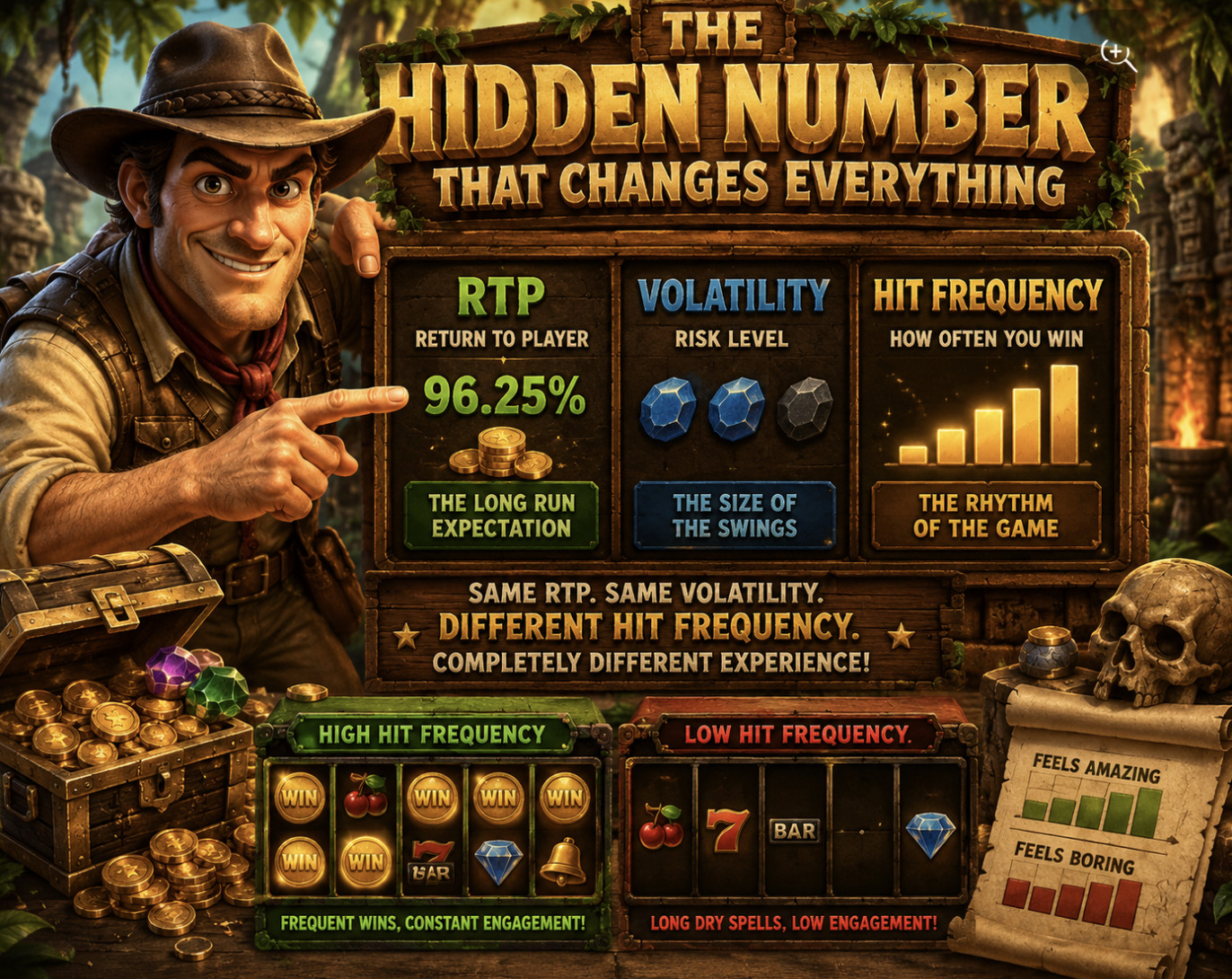
Ask a slots player which numbers matter and you will hear two answers: RTP and volatility. Both deserve their reputation. But there is a third figure, less discussed and rarely displayed as prominently, that has an outsized effect on what a session actually feels like from spin to spin. It is called hit frequency, and it explains why two slots can share the same headline statistics yet play like completely different games — one that keeps you constantly engaged with small returns, another that leaves you staring at dry spin after dry spin. Understanding hit frequency, and how it fits alongside the numbers you already know, is the missing piece that makes sense of a lot of slot behaviour that otherwise seems mysterious.
What hit frequency actually measures
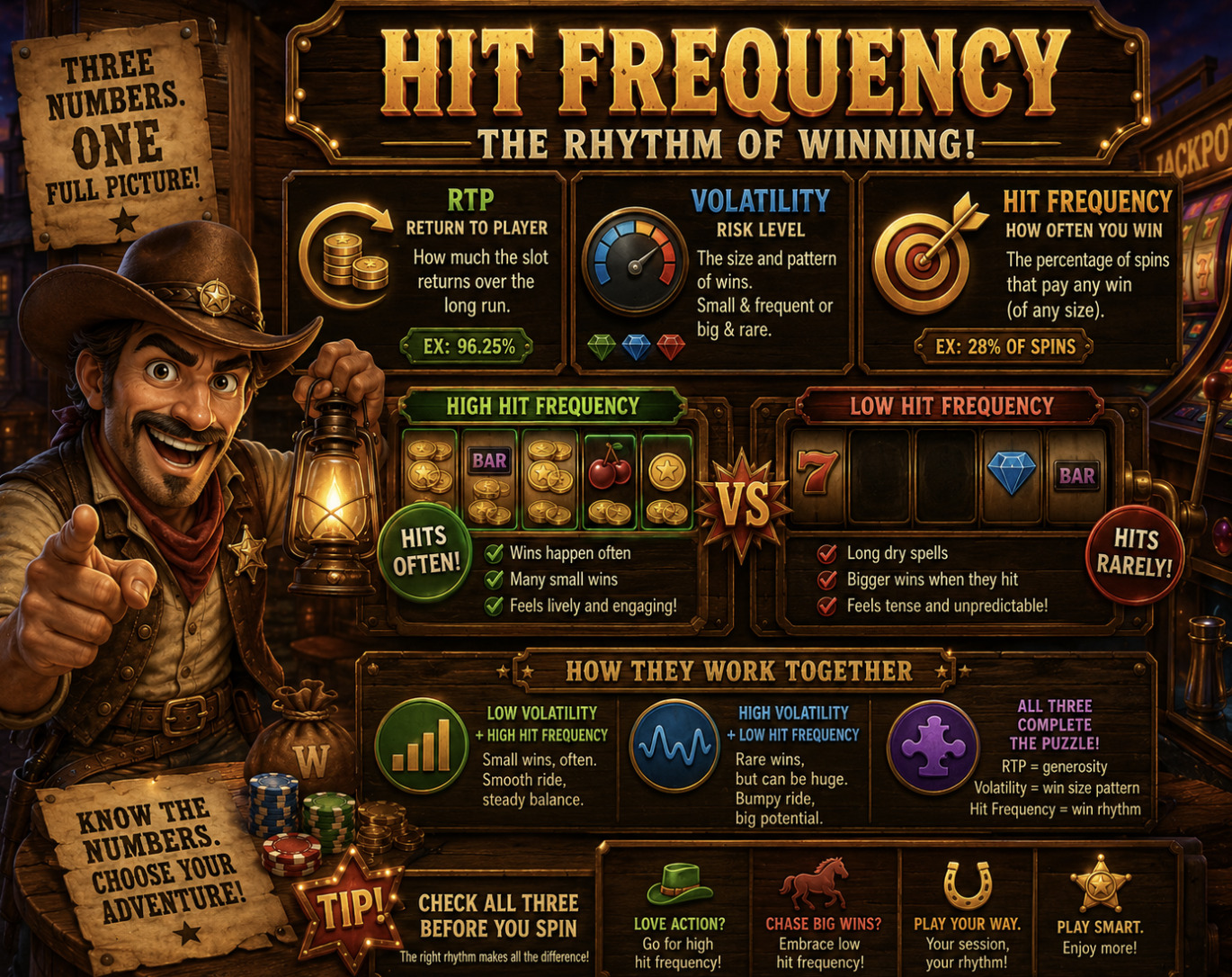
Hit frequency is a simple idea with a specific meaning: it is how often a slot produces any winning outcome at all, regardless of how big that win is. A slot with a high hit frequency pays something on a large share of spins, so wins land often, even if many of them are tiny. A slot with a low hit frequency leaves a great many spins paying nothing, so wins are comparatively rare. Note the crucial detail — hit frequency says nothing about the size of a win, only about how often a win of any amount occurs. A slot could pay out constantly in dribbles, or seldom in bursts, and hit frequency is the number that captures which.
This is what makes it different from the two figures everyone knows. RTP describes how much of all money wagered a slot is designed to return over the very long run — a measure of overall generosity. Volatility describes the pattern of wins, whether they arrive small and steady or rare and large. Hit frequency is related but distinct: it measures the raw rhythm of winning, the sheer proportion of spins that produce a result. Two of these numbers can be identical while the third differs, and that difference is felt immediately at the reels.
Why it shapes how a slot feels
The reason hit frequency matters to players, even those who have never heard the term, is that it governs the tempo of a session more directly than anything else. A high-hit-frequency slot feels lively and eventful. Something is happening often — a small win here, another there — and even when those wins amount to less than the stake, the constant activity keeps the game engaging and the balance moving in small steps. The experience feels warm and busy, regardless of whether you are actually ahead.
A low-hit-frequency slot feels the opposite. Long stretches pass with nothing, the balance drains steadily through dead spins, and the game can feel cold and unforgiving even if it is capable of a big payout when it finally connects. This is the texture of play, and it is hit frequency, more than RTP or volatility alone, that determines it. Crucially, a slot can feel eventful or barren independently of whether it is generous overall, which is why two games with the same RTP can produce such different sessions — one that keeps you comfortably occupied and one that tests your patience. The number nobody talks about is the one you feel most.
How it interacts with the other numbers
Hit frequency does not exist in isolation; it works in concert with volatility, and understanding the interaction is where real insight lies. The two tend to move together in intuitive ways. Low-volatility slots usually have high hit frequency: they pay out often, in small amounts, producing that steady, forgiving rhythm. High-volatility slots usually have low hit frequency: they pay rarely, but when they do, the win can be large. This pairing is why a high-variance game feels like a rollercoaster of droughts and spikes — the low hit frequency creates the droughts, the high volatility supplies the occasional spike.
Reading these numbers together, rather than fixating on any one, is what gives you a genuine picture of how a slot will behave. RTP tells you the long-run generosity. Volatility tells you whether wins are small-and-frequent or large-and-rare. Hit frequency tells you how often anything happens. Operators often publish these details, and on sites such as wintino.pl the game information typically lists a slot's key statistics precisely so a player can judge in advance what kind of experience to expect. A player who checks all three before playing knows not just whether a slot is generous, but whether it will feel busy or barren, steady or streaky — which is exactly the knowledge that lets you choose a game that suits how you actually like to play.
Matching the rhythm to how you play
The practical value of hit frequency is that it lets you choose deliberately rather than by accident. Some players enjoy the constant engagement of frequent small wins, the sense that the game is always doing something, even at the cost of rarely landing anything dramatic. For them, a high-hit-frequency, low-volatility slot is the right fit: it stretches a budget across many active spins and feels steady. Other players find that rhythm boring and prefer the tension of a game that goes cold and then, occasionally, erupts. For them, a low-hit-frequency, high-volatility slot delivers exactly that, with the real risk that the eruption never comes in a given session.
Neither preference is better; they are simply different tastes, and hit frequency is the information that lets you match a game to yours. A player who wants their money to last but picks a low-hit-frequency slot will likely have a short, frustrating time; one who craves excitement but chooses a high-hit-frequency game may find it pleasant but tame. Knowing the number in advance means the game feels the way you wanted it to, which is the whole point of paying attention to the maths before you spin rather than being surprised by it after.
The honest bottom line
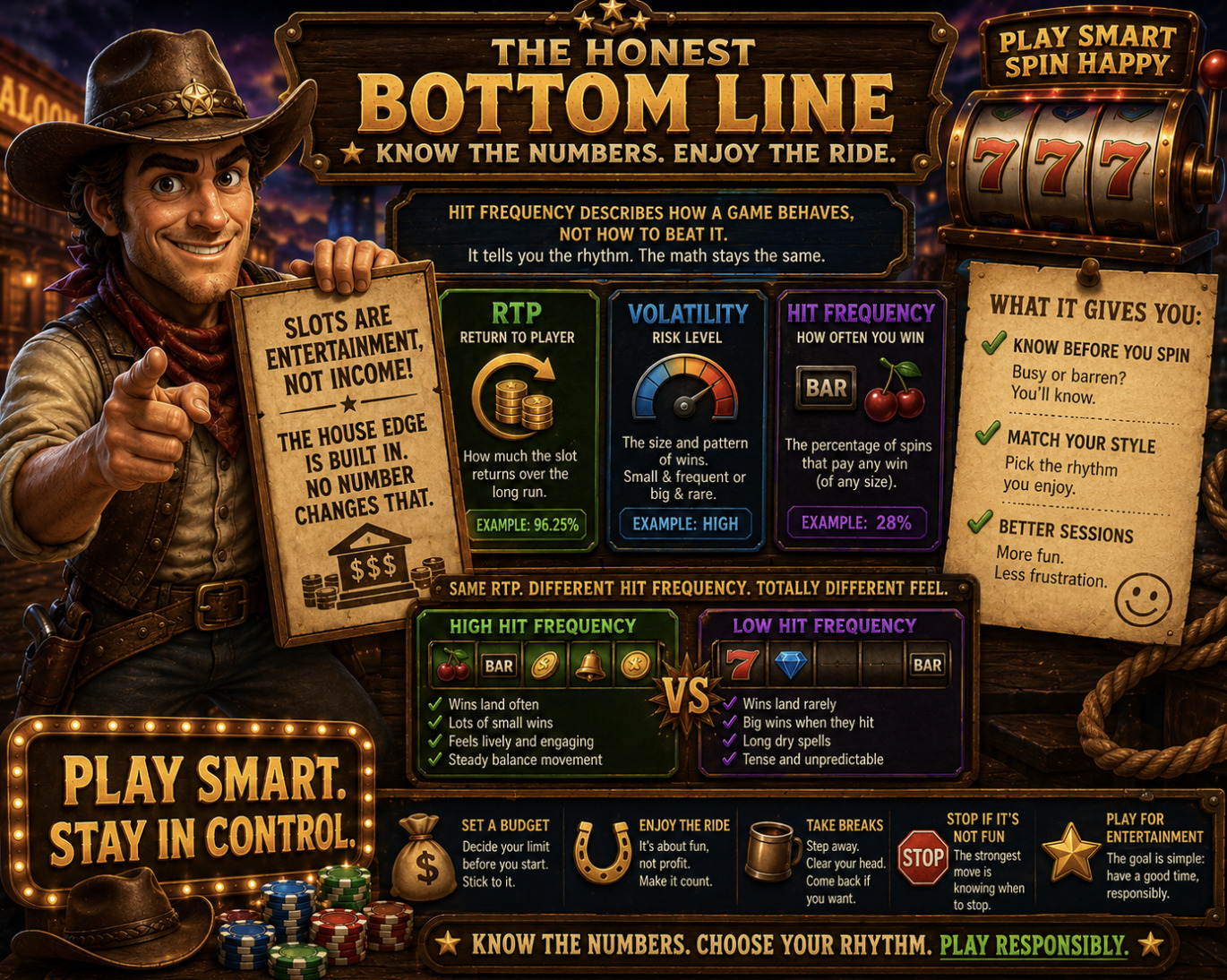
None of this changes the fundamental nature of slots, and it would be dishonest to imply otherwise. Hit frequency, like RTP and volatility, describes how a game behaves, not how to beat it. The house edge is built into the RTP and is entirely unaffected by how often the slot pays out — a high-hit-frequency game is not more winnable than a low-hit-frequency one, it simply distributes its activity differently. No understanding of these numbers turns a slot into a way to make money, because over time the mathematics favours the house by design, whatever the rhythm.
What understanding hit frequency does give you is clarity: the ability to look at a slot's numbers and know, before you play, whether it will feel busy or barren and whether that suits you. Treat slots as what they are — paid entertainment with a built-in cost over time — set a budget before you start, and use hit frequency alongside RTP and volatility to pick games whose rhythm you genuinely enjoy. That is the sensible use of the number nobody talks about: not to gain an edge that doesn't exist, but to spend your time and money on the kind of session you actually wanted. And if playing ever stops being fun, stepping back is always the stronger move.